In-Depth Review: TTArtisan AF 56mm F1.8
Introduction
Chinese lens manufacturers are living through a golden age. The variety of autofocus lenses available today was unthinkable just five years ago. TTArtisan provided me with their AF 56mm F1.8 to test in a real-world environment: the chaotic and vibrant streets of Guangzhou.
This lens lands on competitive ground. The 56mm focal length (85mm equivalent on Full Frame) is the standard for portraits, and in the Fujifilm ecosystem, we already have established giants: the razor-sharp Sigma 56mm f/1.4, the budget-friendly Viltrox, or the legendary (and expensive) Fujinon XF 56mm f/1.2.
Transparency Note: I am not a lab technician or a studio photographer. I am a lover of street photography. My analysis doesn’t seek to count resolution lines, but to offer an honest exploration of how this tool performs on the street. Can a “low cost” lens satisfy the needs for speed and precision that China demands? Let’s find out.
Quick Specs
| Feature | Specification |
|---|---|
| Focal Length | 56mm (approx. 85mm full-frame equiv.) |
| Aperture | F1.8 - F16 |
| Diaphragm Blades | 9 blades |
| Optical Construction | 10 elements in 9 groups |
| Min. Focus Distance | 0.5 meters |
| Filter Diameter | 52mm |
| Weight | ~233g |
| Mount Tested | Fujifilm X |
Build and Design: Unexpectedly Solid (3.5/5)
Feel and Materials
My first impression upon taking the TTArtisan AF 56mm F1.8 out of the box was surprise. Unlike early versions of budget lenses from brands like Viltrox or Yongnuo that abused plastic, here we find an all-metal construction.
Weighing in at 236g with restrained dimensions, it feels dense and robust, but not heavy. It balances perfectly on bodies like the X-T4 or X-S20. While compact, it’s impossible to reach the extreme miniaturization of the Fujinon XF 50mm f/2 (the “Fujicron”), but for an f/1.8, the size is more than correct.
Ergonomics and the Big Omission
The focus ring is wide, metallic, and has nice resistance, ideal if you need precise manual adjustments. However, we encounter the Achilles’ heel of this series for Fuji users: the lack of an aperture ring. Losing physical aperture control subtracts points from the “retro” and tactile experience we look for in Fujifilm. You get used to using the command dial, yes, but that visual immediacy is lost.
Extra Details
- Lens Hood: It includes a hood that does its job, although the fit could be smoother.
- Connectivity: Like its 27mm or 23mm siblings, the rear cap includes a USB-C port for firmware updates. A brilliant detail that avoids having ugly ports on the lens barrel.

Autofocus: Hits and Misses (4/5)
The STM (Stepping Motor) system has come a long way.
- Speed: Outdoors and in good light, focus is fast and silent. For posed portrait photography or static situations, it is impeccable.
- Tracking (Eye-AF): Eye detection works surprisingly well. The lens tracks the subject without losing it in most cases.
- Weak Points: Compared to native optics or the 23mm f/2, it feels a split-second slower. In low contrast or low light situations (dark nights), the dreaded “focus hunting” appears (the lens goes back and forth before confirming). It’s not dramatic, but if you’re looking to capture fast action at night, you might miss a shot.
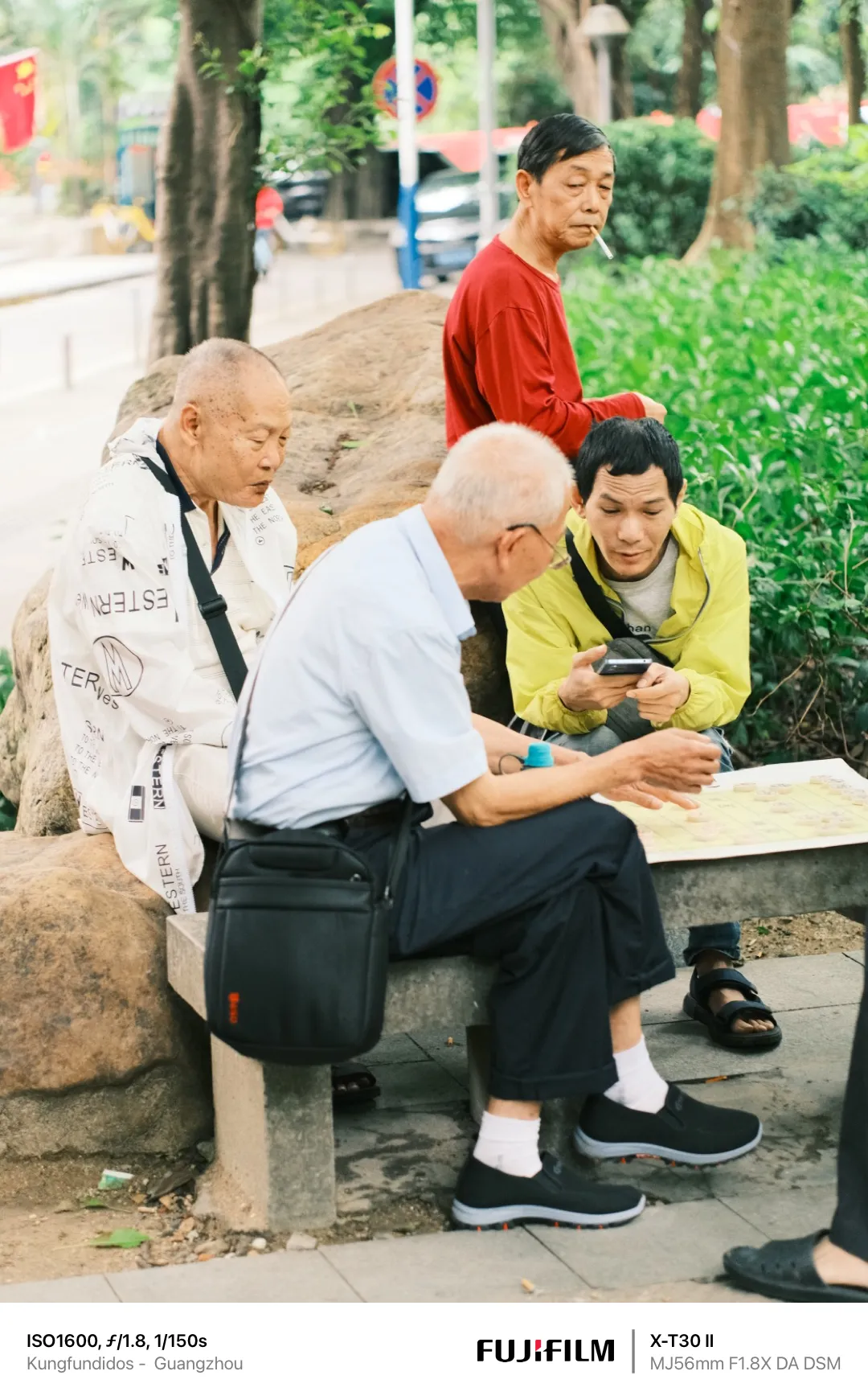
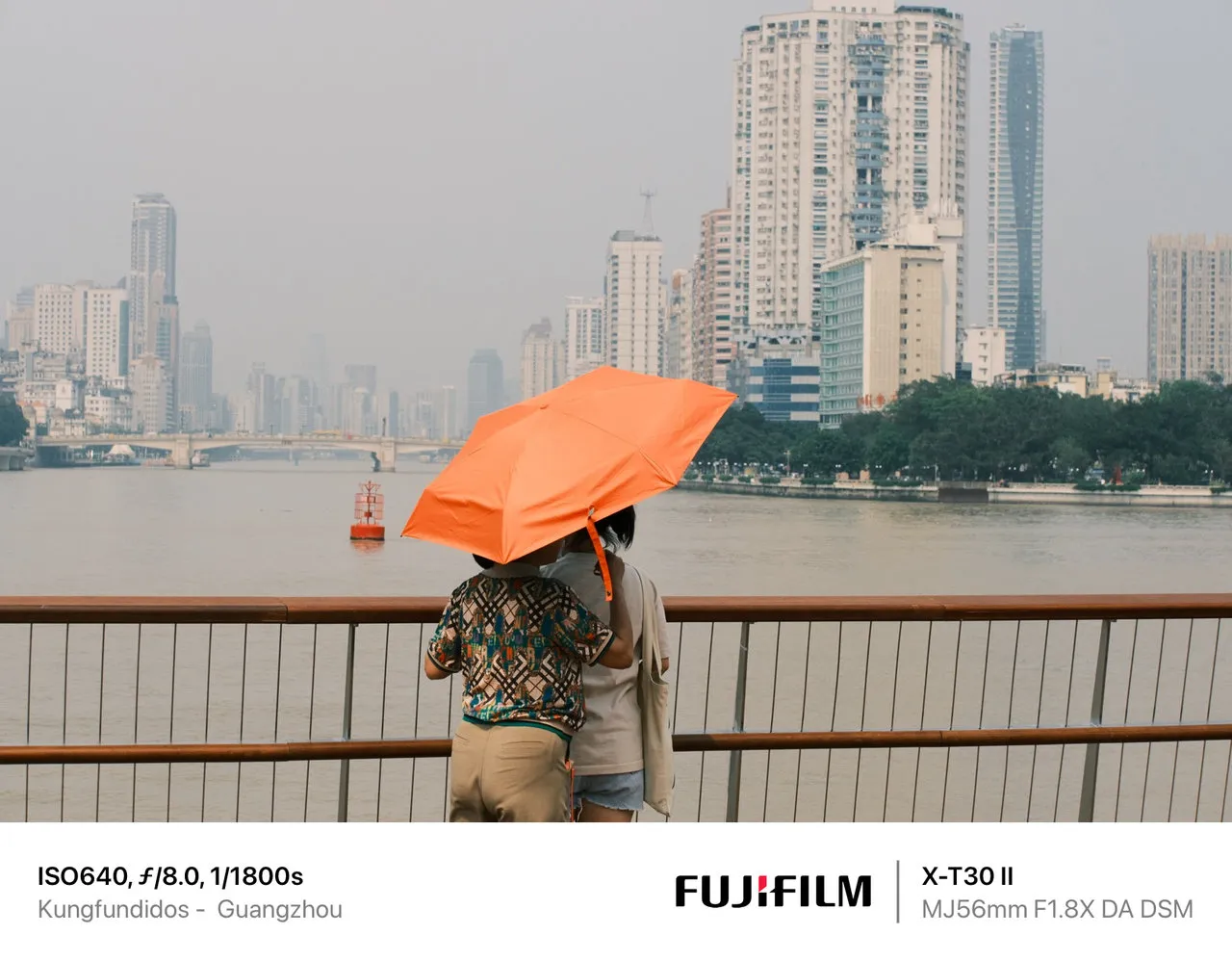
Image Quality (4/5)
Optical quality is where this lens puts its money where its mouth is. For the price, the performance is absurd.
Sharpness
- Center: At f/1.8, center sharpness is excellent. You can count the eyelashes in a portrait or the textures of a wall on the street.
- Corners: As is usual in this range, extreme corners are softer at maximum aperture, but improve drastically when stopped down to f/2.8 or f/4.
- Product Photography: I mentioned in the intro that it might not be ideal for product shots. This is because its minimum focus distance is 0.5m (a bit long for small objects) and you need to stop down significantly to get clinical sharpness across the entire plane.
Chromatic Aberration
In high-contrast situations (branches against a bright sky), some purple or green fringing (longitudinal chromatic aberration) is visible. It is easy to correct in Lightroom, but it is there. It is the price to pay for a fast aperture at a low cost.
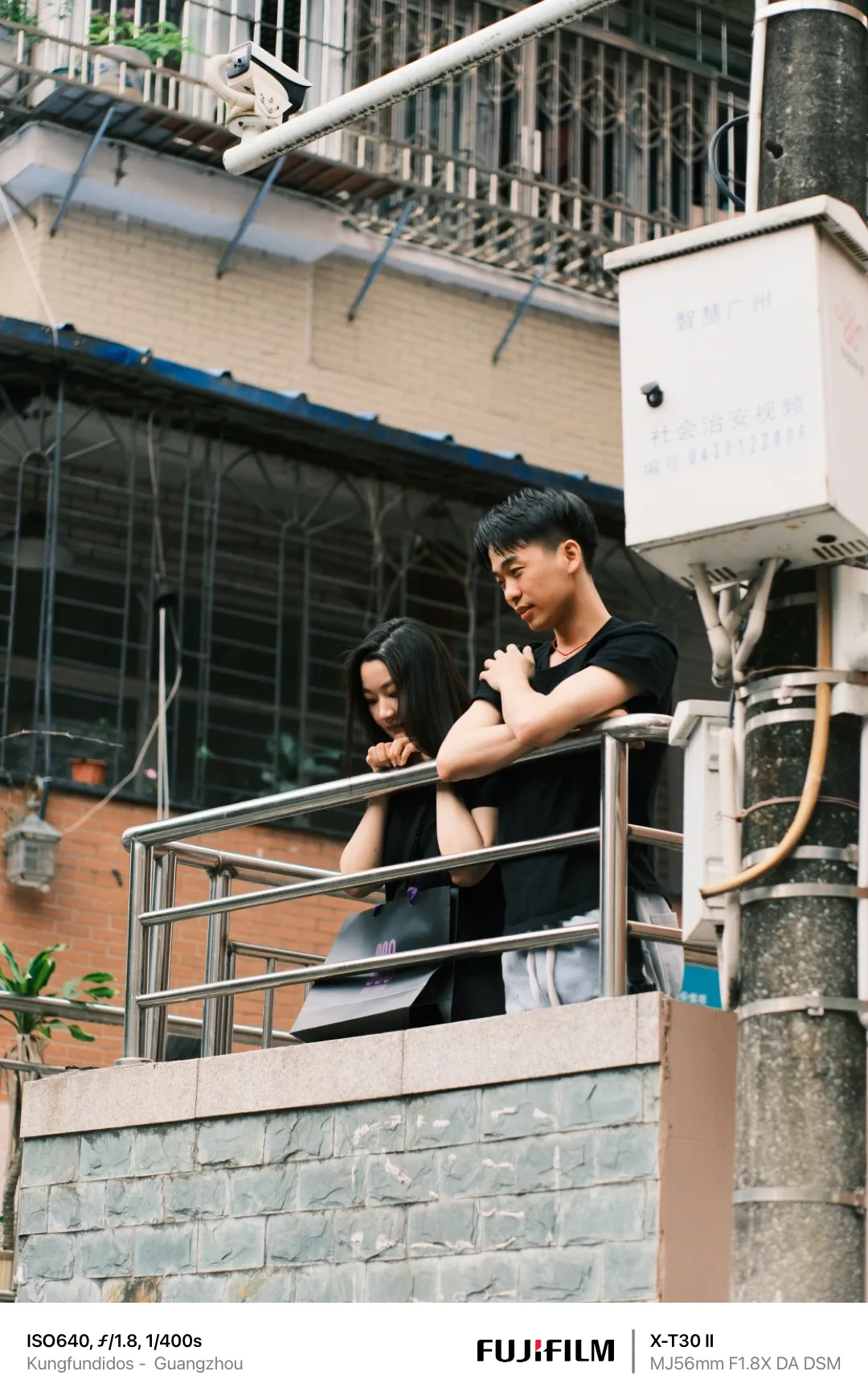
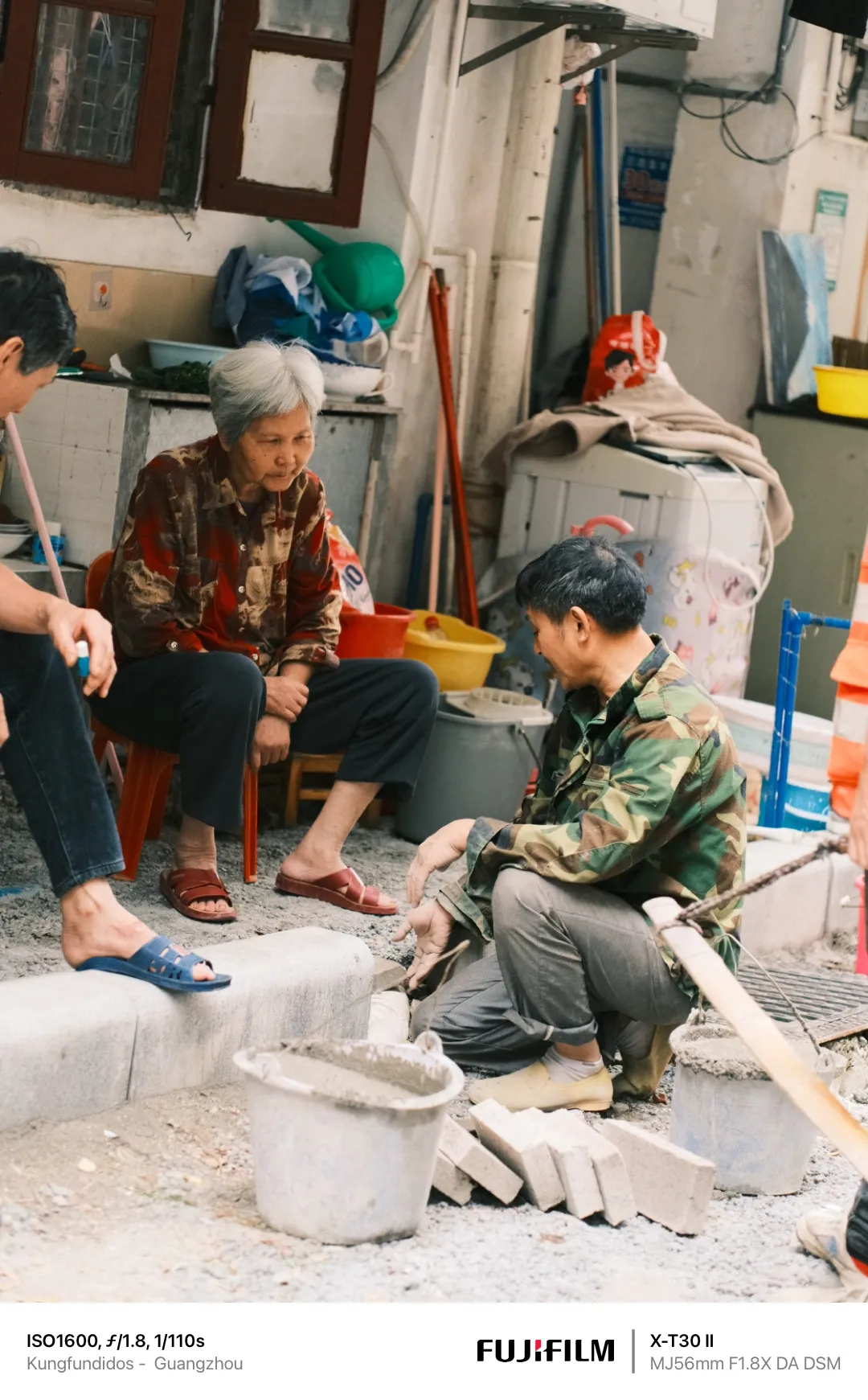
Character and Bokeh
Being a short telephoto (85mm equiv.), compression and background blur are its main attractions. The bokeh is soft and creamy, helping to isolate the subject from the chaos of the city. At the edges, out-of-focus highlights take on a “cat’s eye” shape, giving a vintage or “swirly” look that might be nervous for purists, but to me, it adds personality and dynamism to street photos.
![Bokeh example 1](./Cameramark-638B2